Yamaha GC-20M Concert Classical Guitar Handmade by Toshiro Kato, Solid Spruce, Brazilian Rosewood 1974
Yamaha GC-20M Concert Classical Guitar Handmade by Toshiro Kato, Solid Spruce, Brazilian Rosewood 1974
A rare, incredibly beautiful Yamaha GC-20M Grand Concert Classical Guitar.
Masterbuilt and signed by Toshiro Kato, 1974.
GC-20M was the second from the top model after the GC-30A. They looked identical except for their headstocks. The only other difference was that the GC20M had lacquer finish, while GC30A had shellac finish.
The tone wood that was used for the top of this guitar is select Japanese Ezo Spruce.
It grows in the high mountains of Hokkaido island. Ezo spruce is a slow-growing species that requires specific conditions to thrive, such as a cool and humid climate. As a result, it is a rare and expensive wood. In 1995, the Japanese government designated Ezo spruce as a protected species under the Wildlife Protection and Hunting Law, which prohibits the cutting, sale, and transportation of the wood without authorization. There are some small old stocks still available in Japan but to commission a guitar with Ezo spruce top nowadays would cost many thousands.
The back is from a two piece book-matched Brazilian rosewood with beautiful grain. Brazilian rosewood has its reputation for superior tonal quality. Back in the 1970s and 80s BRW was readily available and not yet subject to the trade restrictions that are in place today. In 1992 it was listed as a protected species so its harvest and trade became strictly regulated. As a result, the supply of Brazilian rosewood has become extremely limited, and its use in guitar making has become increasingly rare.
The sound of this guitar is very impressive. It's rich and beautiful with overtones of sweetness and good resonance. There's ample amount of brightness, great depth and balance across all registers. Perfect for recording and performance. This GC-20M will easily outperform the more recent Custom Shop Yamaha guitars that range from $8000 to $10000. It aged very well, has been tested by time and shows no issues. Great addition to a pro player's arsenal or collection.
Cosmetically, the instrument is in great condition, with only minor signs of use. Just amazing for an instrument that is a 49 years old. The only marks that we can see when looking up close are by the bridge from setting up treble strings (seen on pic. 5).
Neck is very clean with minimal fretwear. Intonation is excellent. It has a nice C-profile neck that feels comfortable to play. With its full sound and impressive projection, the guitar plays nicely up and down the fretboard.
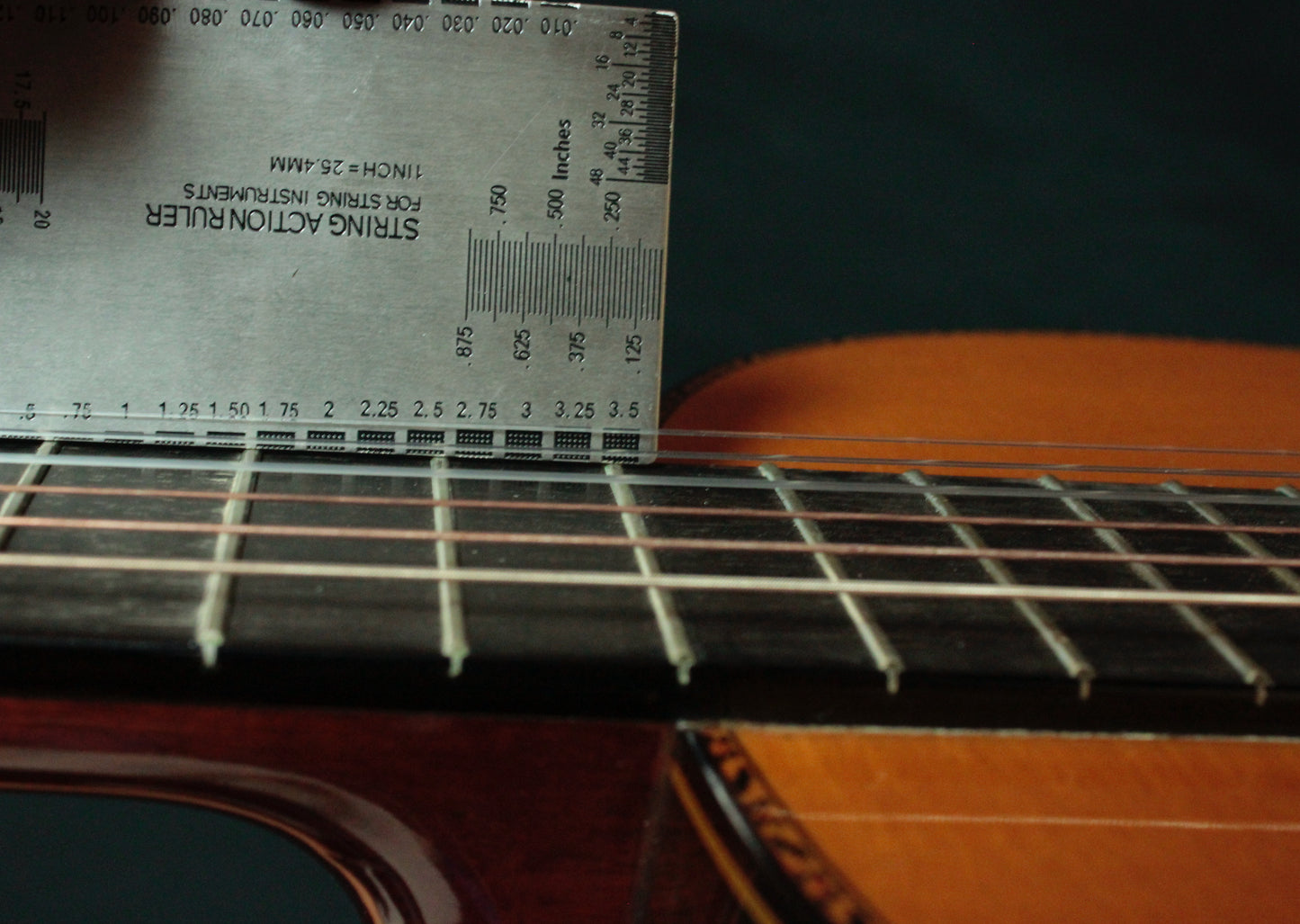
Action is medium. There is not a lot of extra hight on the saddle to make it lower but that's my personal opinion.
Specs.
Years sold 1974-1979
Top Highest grade Ezo Spruce (aka Ezomatsu Spruce)
Finish Lacquer
Back / Sides Solid Brazilian Rosewood (Jacaranda)
Neck Honduran Mahogany
Fingerboard Ebony
Bridge Jacaranda (Brazilian Rosewood)
String Length 662 mm (26')
Width at nut 52 mm
Comes with original hard shell case.
Toshiro Kato was considered the most talented master builder at Yamaha. He was born in 1942 in Japan and began his career at Yamaha in 1963 as an apprentice. He quickly demonstrated his talent and dedication and eventually became a master builder. Thanks to Kato's talents Yamaha Corporation was able to price their Grand Concert guitars at a similar level to the famous Masaru Kohno workshop instruments. The GC series guitars were highly valued by many classical guitar players all over the world. At some point in the 1970s, Yamaha guitars had surpassed similarly priced Kohno models in terms of quality.
Kato worked at Yamaha for over 40 years and retired in 2007. He continued to be involved in the guitar-making community as a consultant and teacher, sharing his knowledge and expertise with younger generations of guitar makers.
It should be noted that if contemporary luthiers used old stock of solid tone woods that are 40 years or older to craft a classical guitar, the cost of such an instrument would be close to $10000.
History of Japanese Classical Guitar Making
From the late 1960s to the mid 1980s, Japanese luthiers produced guitars of exceptional quality. These skilled craftsmen typically ran small shops, employing a handful of master builders who were often trained in Spain or under Spanish master builders in Japan. During this period, bans on certain types of wood were not yet in place, allowing luthiers to source high-quality wood for their creations. Although these guitars are considered a bargain in today's market, finding top-quality Japanese classical guitars from this era can be challenging, and restrictions on exporting certain types of wood make them even more difficult to obtain. Similar guitars built with comparable materials today would cost significantly more due to the scarcity or complete bans on certain types of wood. Most of those talented luthiers from the 70s and 80s are now retired or have passed away.
Couldn't load pickup availability
Out of stock
View full details