
Case vs. Stand vs. Wall Hanger for Guitar
Care & Maintenance
Where a guitar spends its time between sessions matters almost as much as how it's played — here's how the three main storage options actually compare.
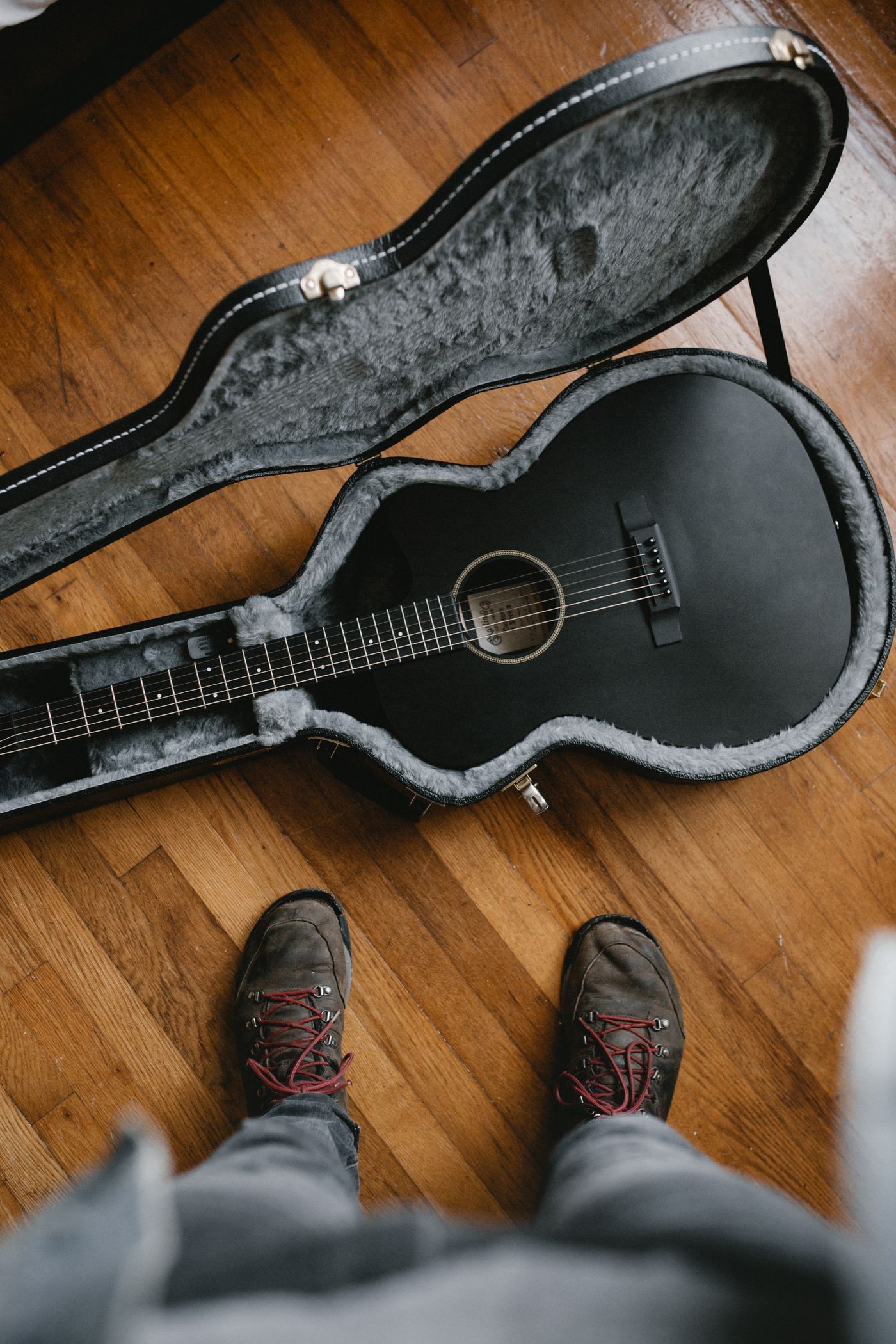
How you store a guitar between practice sessions is a genuine decision, not an afterthought, and the three common options — case, stand, and wall hanger — each trade convenience against protection in a different way. None of them is universally correct; the right choice depends on your room, your habits, and how often you actually pick the guitar up.
◆
The case: maximum protection, least convenience

A case, whether a rigid hard case or a padded gig bag, is the safest place a guitar can be. Closed and latched, it's protected from knocks, from pets and small children, from direct sunlight, and from the worst of a room's humidity swings, since the enclosed air inside a case changes far more slowly than the room around it.
The trade-off is friction. A guitar zipped into a case is a guitar you have to deliberately unpack before you can play it, and that small bit of extra effort measurably reduces how often people actually pick an instrument up. For serious daily practice, that friction can work against you; for travel, storage between infrequent sessions, or protecting a valuable instrument, it's exactly the point.
The stand: a practical middle ground
A stand keeps the guitar upright and immediately playable, with essentially zero friction between deciding to play and actually playing. That accessibility is its whole appeal, and it's a real factor in how consistently people practise — an instrument you can see and reach in three seconds gets picked up far more often than one buried in a closet.
The trade-off is exposure. A guitar on a stand sits in the open, exposed to whatever the room's temperature and humidity happen to be doing, at some risk from a knocked elbow, a curious pet, or a small child, and gathering dust on the exposed wood over time. A stand works best in a stable, dedicated practice space, and less well in a room with big temperature swings, heavy foot traffic, or animals that treat furniture as fair game.
The guitar you'll actually pick up and practise on is usually more valuable than the one sitting perfectly protected in its case. Weigh accessibility as a real factor, not an afterthought.
◆
The wall hanger: space-saving, with one real caveat
A wall-mounted hanger displays a guitar like a piece of art, saves floor space entirely, and keeps it just as instantly accessible as a stand. For players with limited room, or several guitars to store, it's often the most practical option on the list.

The one genuine caveat, and it's worth taking seriously: avoid mounting a hanger on an exterior wall. Exterior walls run cooler and swing in humidity more than interior walls do, and a guitar hanging directly against one gets none of the buffering that even open-room air offers. An interior wall, away from direct sunlight and radiators, is a far safer spot. Beyond that, the same exposure trade-offs as a stand apply — no protection from knocks or curious pets, and direct exposure to the room's conditions.
◆
Side by side
| Protection | Accessibility | Space needed | |
|---|---|---|---|
| Case | Highest — shielded from knocks, dust and humidity swings | Lowest — has to be unpacked | Floor or closet space |
| Stand | Low — fully exposed to the room | Highest — instantly playable | Floor space |
| Wall hanger | Low — fully exposed to the room | Highest — instantly playable | None (uses wall space) |
Don't forget humidity
Storage method and humidity are closely linked, and it's worth thinking about them together rather than separately. A case does more than protect against knocks — because the air trapped inside it changes far more slowly than the room around it, a case acts as a buffer against the day-to-day humidity swings that cause the most common damage to acoustic guitars, from a shrinking, cracking top in overly dry air to a swollen, dead-sounding one in overly damp air. A stand or wall hanger offers no such buffer at all; the guitar experiences whatever the room is doing in real time. If your home doesn't hold a stable 45–55% relative humidity year-round, that gap matters more than it might seem, especially through a dry winter or a humid summer. A case humidifier is a cheap, simple way to close it, and it's worth using even if the guitar mostly lives on a stand — a few minutes stored in its case with a humidifier overnight during extreme weather can meaningfully offset a day spent sitting exposed.
What actually makes sense for most people
A genuinely practical approach for most players is to combine two of these rather than picking just one: a stand or wall hanger for the guitar in current, regular use, so it stays accessible and gets played, and a case for travel, longer breaks, or storing any additional instruments that aren't in daily rotation. That combination captures the accessibility benefit where it matters most while still keeping a case available for the situations — a trip, a move, a period of not playing — where real protection genuinely counts.
Whichever you choose, the storage method matters less than the environment around it. A guitar in a case in a damp basement is still at risk; a guitar on a stand in a stable, climate-controlled room is often perfectly safe. Storage is one part of a bigger picture, alongside the humidity and temperature habits covered in our humidity guide.
A comparison of guitar storage options — hard case, gig bag, stand and wall hanger — and how to decide which fits your space and habits.