
Guitarra acústica: con cutaway vs. sin cutaway
Compra y configuración
Una pequeña curva tallada en el cuerpo y una auténtica contrapartida entre alcanzar los trastes más altos y conservar hasta el último ápice de la resonancia natural de la guitarra.

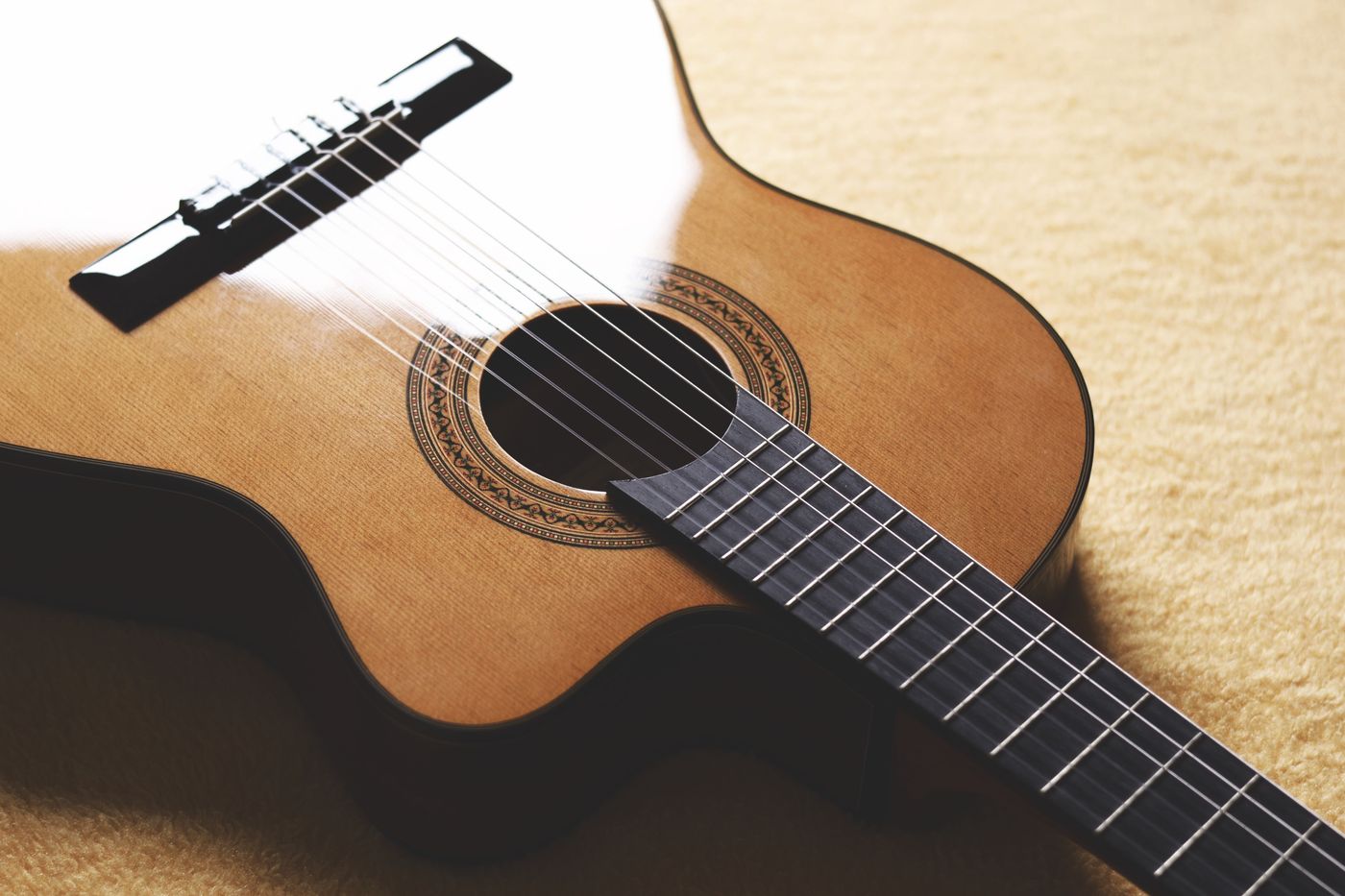
Un cutaway es una de las decisiones de diseño más visibles de una guitarra y una de las más fáciles de valorar una vez que sabes qué se está sacrificando realmente. Es una muesca curva tallada en el cuerpo, donde el lóbulo superior se une al mástil, y su único propósito es proporcionar a la mano que pisa las cuerdas un camino despejado hacia los trastes que, de otro modo, quedarían ocultos dentro del cuerpo. Ese es todo el beneficio; todo lo demás es una contrapartida frente a él.
◆
Qué hace realmente un cutaway
En un cuerpo estándar sin cutaway, el punto donde el mástil se une al cuerpo limita hasta dónde puede llegar cómodamente el músico por el diapasón; más allá aproximadamente del traste 12 al 14, el propio cuerpo estorba a la mano. Un cutaway elimina esa obstrucción al curvar hacia fuera parte del cuerpo superior, lo que permite acceder claramente a los trastes más altos del mástil.
Para los estilos que utilizan habitualmente la parte superior del mástil —interpretación melódica, solos y cualquier cosa que llegue más allá del punto donde el mástil se une al cuerpo—, ese acceso es un beneficio real y práctico. Para tocar ritmos, acompañar con acordes y la mayoría del repertorio clásico y de fingerstyle, que rara vez llega tan arriba del mástil, es una característica que en gran medida no se utiliza.
La contrapartida: volumen del cuerpo y tono
Un cutaway no es gratis. Eliminar parte del lóbulo superior reduce el volumen interno de aire total del cuerpo, y ese volumen está directamente relacionado con la cantidad de respuesta de graves y resonancia general que produce una guitarra. En la práctica, esto significa que una guitarra con cutaway generalmente tendrá un sonido algo más silencioso y con menos graves que el mismo modelo sin cutaway, manteniendo todo lo demás igual. En algunos instrumentos, la diferencia es tan sutil que la mayoría de los músicos no la notarían en una comparación a ciegas; en guitarras cuyo tamaño de cuerpo y sistema de barras armónicas se diseñaron específicamente para maximizar la resonancia, puede ser más evidente.
También hay un aspecto estructural. Eliminar parte del cuerpo cambia la forma en que la tapa queda arriostrada y sostenida cerca de la unión con el mástil, y un cutaway bien diseñado tiene esto en cuenta durante la construcción; uno mal ejecutado puede hacer que la guitarra se sienta menos sólida estructuralmente en esa unión con el tiempo. Esta es una de las áreas en las que la calidad de construcción realmente importa más que el concepto del cutaway en sí.
Un cutaway no es una mejora ni un empeoramiento: es un intercambio específico de una pequeña cantidad de resonancia por un tipo específico de acceso. Que ese intercambio valga la pena depende por completo de si vas a utilizar lo que te ofrece.
◆
Por qué las guitarras clásicas casi nunca tienen uno
El repertorio de guitarra clásica rara vez exige el acceso extremo a los trastes superiores que proporciona un cutaway, y tanto la técnica como la tradición clásicas se inclinan por conservar hasta el último ápice de la resonancia y el volumen naturales del instrumento, en lugar de renunciar a parte de ellos. Si a eso le sumamos una escala y una forma del cuerpo que ya difieren de las de una acústica con cuerdas de acero, es fácil entender por qué los cutaways se mantuvieron casi por completo como un fenómeno de las guitarras con cuerdas de acero: el mundo de la guitarra clásica simplemente nunca tuvo la misma necesidad del intercambio que representa un cutaway.
Comparación lado a lado
| Con cutaway | Sin cutaway | |
|---|---|---|
| Acceso a los trastes superiores | Excelente, mucho más allá del traste 14 | Limitado más allá de aproximadamente el traste 12-14 |
| Resonancia del cuerpo | Ligeramente reducida, debido al menor volumen interno de aire | Maximizada para el tamaño del cuerpo |
| Habitual en | Guitarras acústicas con cuerdas de acero, especialmente con electrónica | Guitarras clásicas y muchas guitarras tradicionales con cuerdas de acero |
| Más adecuado para | Interpretación melódica, solos, guitarristas que usan todo el mástil | Interpretación rítmica, fingerstyle, repertorio clásico |
Entonces, ¿cuál deberías elegir?
La prueba honesta es sencilla: piensa con qué frecuencia tocas realmente, o planeas tocar, más allá del punto donde el mástil se une al cuerpo. Si la respuesta es con regularidad - líneas melódicas, solos, interpretación melódica en registros altos -, el cutaway se justifica y la pequeña pérdida de resonancia vale la pena por el acceso que proporciona. Si la respuesta es rara vez o nunca, como ocurre con la mayoría de los guitarristas rítmicos, con la mayor parte del repertorio clásico y con buena parte del fingerstyle, un cuerpo sin cutaway te ofrece todo el potencial resonante de la guitarra sin renunciar a nada a cambio, ya que nunca ibas a utilizar ese acceso.
Aquí no hay una respuesta incorrecta, solo un desajuste entre la característica y tu forma real de tocar. Un cutaway que permanece sin usar en una guitarra que solo se toca rasgueando en las primeras posiciones no perjudica nada, pero tampoco ayuda: es simplemente resonancia por la que pagaste y que no aprovechaste.
Una guía sobre los cuerpos de guitarra con cutaway frente a los que no lo tienen: qué se sacrifica realmente con un cutaway y cómo decidir si lo necesitas.